

 Image 1 of 1
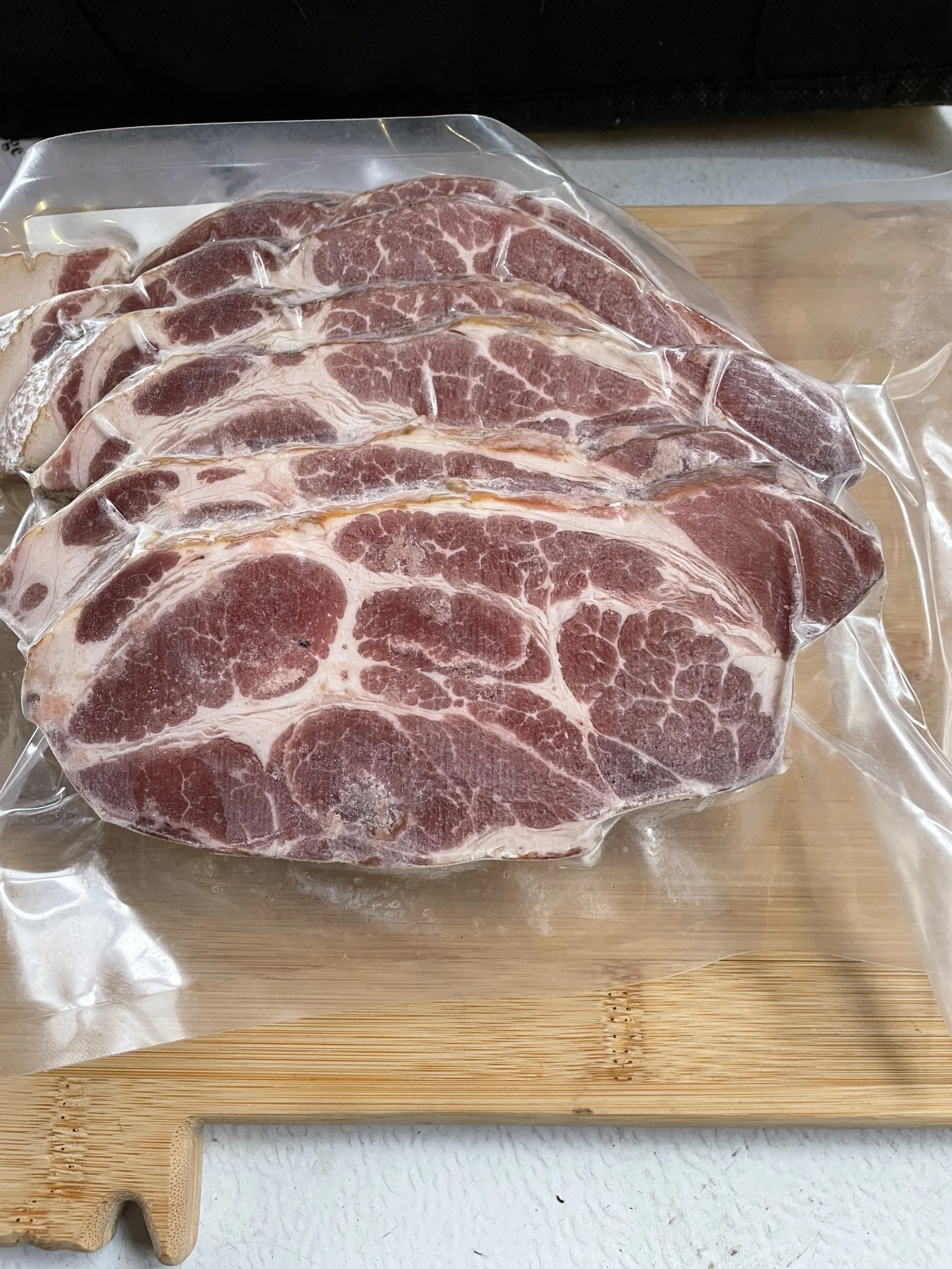
Cottage bacon — sometimes called "cottage ham" — is a lean, flavorful cut made from the pork belly or pork shoulder that’s been cured, often smoked lightly, and sliced thin. Unlike streaky bacon from the belly, cottage bacon is usually made from the pork shoulder (also called Boston butt) and has a rounder, meatier profile with less fat and a texture closer to ham.
Key characteristics
Cut and appearance: Rounder, leaner slices with a firmer texture than streaky bacon; often sold in thin slices or thicker chops.
Flavor: Savory and mildly smoky when smoked; curing provides a salt-forward taste without the heavy fattiness of belly bacon.
Fat content: Lower than traditional belly bacon; more meat per slice, making it a good choice when you want bacon flavor without as much grease.
Cooking behavior: Holds shape well when cooked, browning and crisping at the edges while staying meaty in the center; less shrinkage than streaky bacon.
How to use cottage bacon
Breakfast: Pan-fry or griddle until lightly crisp and serve with eggs. Its meaty texture pairs well with poached or fried eggs and toast.
Sandwiches: Use warm slices in breakfast sandwiches, Reubens, or club-style sandwiches for a hammy bacon alternative.
Salads and bowls: Crisp and crumble over salads, grain bowls, or baked potatoes for savory crunch with less oil.
Cooking and baking: Works well in quiches, frittatas, and savory breads where you want bacon flavor but a more uniform texture.
Substitution: Swap for regular bacon when you want less fat, or for ham when you want thinner, smoky slices.
Cooking tips
Start in a cold skillet and cook over medium heat to render any fat gradually and prevent over-browning.
For extra crispiness, finish under a broiler for a minute or two, watching closely.
Reduce salt in recipes when using cottage bacon, as it is cured and can add significant saltiness.
If using in dishes with long cook times, add near the end to preserve texture and prevent turning dry.
Culinary profile summary Cottage bacon offers a leaner, meatier alternative to traditional belly bacon. Its ham-like texture and concentrated pork flavor make it versatile for breakfasts, sandwiches, salads, and cooked dishes where you want bacon character without the heavy fat. Ideal for those seeking a heartier slice with less grease, cottage bacon is a practical, flavorful option for farm-to-table cooking.
Cottage bacon — sometimes called "cottage ham" — is a lean, flavorful cut made from the pork belly or pork shoulder that’s been cured, often smoked lightly, and sliced thin. Unlike streaky bacon from the belly, cottage bacon is usually made from the pork shoulder (also called Boston butt) and has a rounder, meatier profile with less fat and a texture closer to ham.
Key characteristics
Cut and appearance: Rounder, leaner slices with a firmer texture than streaky bacon; often sold in thin slices or thicker chops.
Flavor: Savory and mildly smoky when smoked; curing provides a salt-forward taste without the heavy fattiness of belly bacon.
Fat content: Lower than traditional belly bacon; more meat per slice, making it a good choice when you want bacon flavor without as much grease.
Cooking behavior: Holds shape well when cooked, browning and crisping at the edges while staying meaty in the center; less shrinkage than streaky bacon.
How to use cottage bacon
Breakfast: Pan-fry or griddle until lightly crisp and serve with eggs. Its meaty texture pairs well with poached or fried eggs and toast.
Sandwiches: Use warm slices in breakfast sandwiches, Reubens, or club-style sandwiches for a hammy bacon alternative.
Salads and bowls: Crisp and crumble over salads, grain bowls, or baked potatoes for savory crunch with less oil.
Cooking and baking: Works well in quiches, frittatas, and savory breads where you want bacon flavor but a more uniform texture.
Substitution: Swap for regular bacon when you want less fat, or for ham when you want thinner, smoky slices.
Cooking tips
Start in a cold skillet and cook over medium heat to render any fat gradually and prevent over-browning.
For extra crispiness, finish under a broiler for a minute or two, watching closely.
Reduce salt in recipes when using cottage bacon, as it is cured and can add significant saltiness.
If using in dishes with long cook times, add near the end to preserve texture and prevent turning dry.
Culinary profile summary Cottage bacon offers a leaner, meatier alternative to traditional belly bacon. Its ham-like texture and concentrated pork flavor make it versatile for breakfasts, sandwiches, salads, and cooked dishes where you want bacon character without the heavy fat. Ideal for those seeking a heartier slice with less grease, cottage bacon is a practical, flavorful option for farm-to-table cooking.